
Mass-Energy Equivalence
Mass-energy equivalence is the principle, derived from Einstein's special theory of relativity, stating that mass and energy are two forms of the same physical quantity and can be converted into each other. Expressed by the famous equation E = mc², it reveals that even a small amount of mass corresponds to an enormous amount of energy, since c² (the square of the speed of light) is approximately 9 × 10¹⁶ m²/s². This principle underlies the energy released in nuclear fission and fusion reactions, and explains the origin of stars' energy output.
Key Formula
E = mc²
LaTeX: E = mc^2
| Symbol | Meaning | Unit |
|---|---|---|
| E | Rest energy (energy equivalent of mass) | Joule (J) |
| m | Rest mass of the object | kilogram (kg) |
| c | Speed of light in vacuum (≈ 3 × 10⁸ m/s) | m/s |
Worked Example
Problem
How much energy is released if 1 gram of matter is completely converted to energy (e.g., in matter-antimatter annihilation)?
Solution
Step 1: Convert mass to kilograms. m = 1 g = 1 × 10⁻³ kg. Step 2: Apply E = mc². c = 3 × 10⁸ m/s, so c² = 9 × 10¹⁶ m²/s². Step 3: E = (1 × 10⁻³ kg)(9 × 10¹⁶ m²/s²) = 9 × 10¹³ J. Step 4: Convert to more intuitive units. 9 × 10¹³ J = 9 × 10¹³ / (4.184 × 10⁹) kcal ≈ 21.5 million kcal. Step 5: Compare to a 20-kiloton nuclear bomb (Hiroshima) ≈ 8.4 × 10¹³ J, so 1 g of matter ≈ 1.07 Hiroshima bombs.
Answer
E = 9 × 10¹³ J (90 terajoules) — equivalent to about 21.5 billion food calories or ~1 Hiroshima bomb
Energy Equivalence of Various Masses
| Mass | Energy (E = mc²) | Equivalent To | Example Context | Conversion Efficiency |
|---|---|---|---|---|
| 1 μg (10⁻⁹ kg) | 90 MJ | 25 kWh electricity | Lab-scale E = mc² | ~100% (antimatter) |
| 1 mg (10⁻⁶ kg) | 90 GJ | 25,000 kWh | Small nuclear device | ~100% (antimatter) |
| 1 g (10⁻³ kg) | 90 TJ | ~1 Hiroshima bomb | Fission efficiency ~0.1% | ~100% (antimatter) |
| 1 kg | 9 × 10¹⁶ J | ~21 Mt TNT | H-bomb yields | ~100% (antimatter) |
| U-235 fission | 200 MeV/atom | 0.09% mass converted | Nuclear power plant | ~0.09% |
| Sun (per second) | 4.3 × 10⁹ kg | 3.8 × 10²⁶ J/s | Solar luminosity | ~0.7% (fusion) |
Interactive Tools
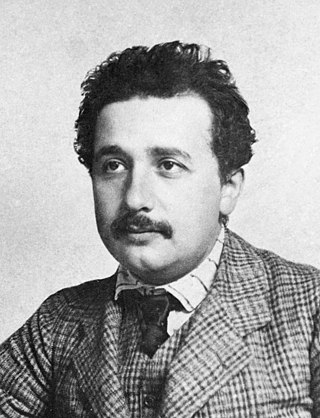
Wikimedia Commons, CC BY-SA
Related Terms
Special Relativity
Special relativity is a physical theory proposed by Albert Einstein in 1905 that describes the relationship between space and time for objects moving at constant velocities, particularly near the speed of light. It is founded on two postulates: the laws of physics are identical in all inertial frames of reference, and the speed of light in a vacuum is constant for all observers regardless of their motion. The theory reveals that time, length, and mass are not absolute but depend on the relative motion between observer and object, unifying space and time into a single four-dimensional continuum called spacetime.
Nuclear Fission
Nuclear fission is a nuclear reaction in which a heavy atomic nucleus (such as uranium-235 or plutonium-239) splits into two or more lighter nuclei, releasing a large amount of energy and typically two or three neutrons. The energy released comes from the binding energy difference between the original nucleus and the products, as described by Einstein's mass-energy equivalence (E = mc²). Controlled fission is the basis of nuclear power plants, while uncontrolled rapid fission is the mechanism of nuclear (fission) bombs.
Nuclear Fusion
Nuclear fusion is a nuclear reaction in which two light atomic nuclei (typically isotopes of hydrogen — deuterium and tritium) combine to form a heavier nucleus, releasing an enormous amount of energy. The energy released greatly exceeds that of fission per unit mass, and the fuel (hydrogen isotopes) is abundant, making fusion the energy source of stars including the Sun. Fusion requires extremely high temperatures (tens of millions of kelvin) to overcome the Coulomb repulsion between positively charged nuclei, which is why sustaining controlled fusion on Earth for power generation remains a major technological challenge being pursued by projects such as ITER and NIF.
From the Latin "massa" (lump, mass) and Greek "energeia" (activity, operation). Einstein first presented this equivalence in a 1905 paper titled "Ist die Trägheit eines Körpers von seinem Energieinhalt abhängig?" (Does the Inertia of a Body Depend Upon Its Energy Content?). The compact form "E = mc²" became iconic in physics and popular culture.