
TCP/IP Protocol
TCP/IP (Transmission Control Protocol/Internet Protocol) is the foundational suite of communication protocols used to interconnect network devices on the internet and most private networks. TCP handles reliable, ordered delivery of data by breaking messages into packets, acknowledging receipt, and retransmitting lost segments, while IP handles addressing and routing each packet to its destination. Together they form the backbone of modern digital communication, enabling everything from web browsing to email.
TCP vs UDP Comparison
| Feature | TCP | UDP |
|---|---|---|
| Connection | Connection-oriented | Connectionless |
| Reliability | Guaranteed delivery | No guarantee |
| Order | Ordered packets | Unordered packets |
| Speed | Slower (overhead) | Faster (low overhead) |
| Use Case | HTTP, Email, FTP | Streaming, DNS, Gaming |
Interactive Tools
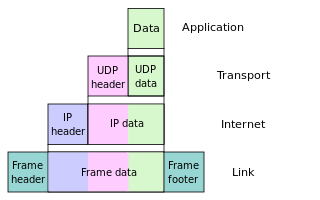
Wikimedia Commons, CC BY-SA
Related Terms
HTTP
HTTP (HyperText Transfer Protocol) is an application-layer protocol that defines how messages are formatted and transmitted between web browsers (clients) and web servers. It operates as a request-response protocol: a client sends an HTTP request (e.g., GET, POST, PUT, DELETE) and the server returns an HTTP response with a status code and the requested resource. HTTPS is the secure version of HTTP, adding TLS encryption to protect data in transit.
IP Address
An IP (Internet Protocol) address is a unique numerical label assigned to each device connected to a computer network that uses the Internet Protocol for communication. IPv4 addresses are 32-bit numbers typically written in dotted-decimal notation (e.g., 192.168.1.1), providing approximately 4.3 billion unique addresses, while IPv6 addresses are 128-bit numbers written in hexadecimal (e.g., 2001:0db8:85a3::8a2e:0370:7334) to accommodate the growing number of internet-connected devices. IP addresses serve two principal functions: host or network interface identification and location addressing.
DNS (Domain Name System)
The Domain Name System (DNS) is a hierarchical, distributed naming system that translates human-readable domain names (such as www.google.com) into numerical IP addresses (such as 142.250.195.68) that computers use to communicate. Often described as the "phone book of the internet," DNS makes it possible for users to access websites using memorable names instead of numeric addresses. DNS queries are typically resolved through a chain of DNS servers including recursive resolvers, root servers, TLD servers, and authoritative name servers.
TCP was coined by Vint Cerf and Bob Kahn in their landmark 1974 paper "A Protocol for Packet Network Intercommunication." "Transmission" derives from Latin transmittere (to send across); "Protocol" comes from Greek protokollon (first glued leaf of a manuscript), used in diplomacy to mean an agreed-upon procedure.